
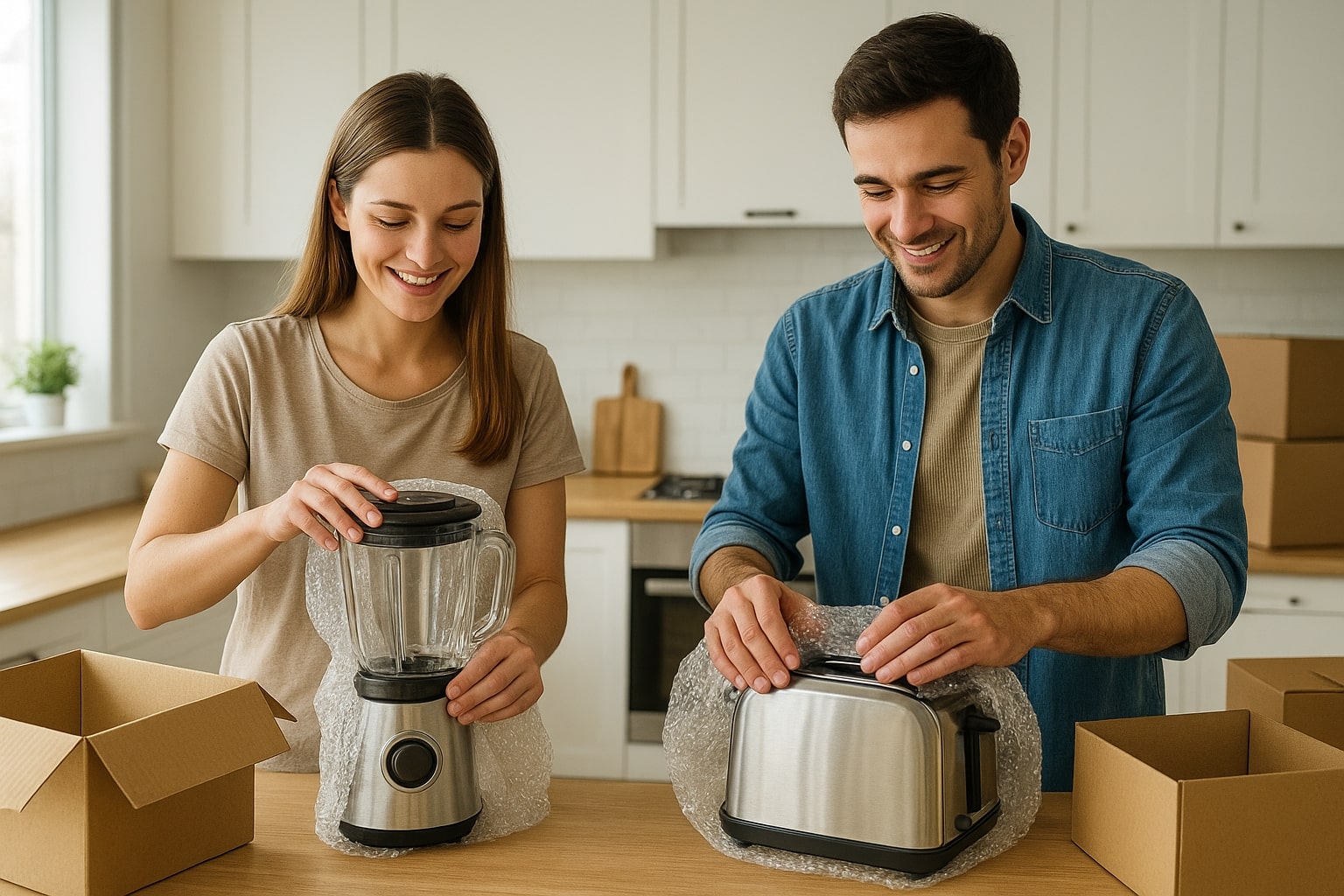
Pack Like a Pro: Your Complete Guide to Safely Moving Kitchen Appliances in Australia
Moving house is a mammoth task, and the kitchen is often the most daunting room of all. It’s the heart of the home, filled with an odd assortment of gadgets, heavy machinery, and delicate items. Packing your kitchen appliances correctly is crucial to ensure they arrive at your new place in perfect working order.
This guide will walk you through everything you need to know, from packing your trusty toaster to prepping your fridge for the big move. We'll make sure your beloved coffee machine and air fryer are ready for action from day one in your new home.
Before You Begin: Gather Your Packing Supplies
Being prepared is half the battle. Before you unplug a single cord, make sure you have the right tools for the job. A quick trip to Bunnings or your local packaging store should do the trick.
- Sturdy Moving Boxes: Get a variety of sizes. Don't overfill large boxes with heavy items.
- Original Boxes: If you still have them, now is their time to shine! They are perfectly designed for the job.
- Packing Paper: For wrapping and filling empty spaces. Avoid newspaper as the ink can transfer.
- Bubble Wrap: Essential for protecting glass components and fragile electronics.
- Strong Packing Tape: To secure boxes and keep everything contained.
- Zip-lock Bags or Small Containers: Perfect for keeping small, detachable parts, screws, and cords organised.
- Permanent Markers: For clear and effective labelling.
- Cleaning Supplies: Microfibre cloths, all-purpose cleaner, and bicarb soda.
- Painter's Tape: Ideal for securing doors and cords without leaving a sticky residue.
The Golden Rules for Packing Any Appliance
Whether it's a blender or a microwave, four key steps apply to almost every kitchen appliance.
- Clean and Dry Thoroughly: This is non-negotiable. Moving dirty appliances can lead to bad odours, mould growth, and even attract pests. Clean every appliance inside and out and ensure it is completely dry before packing.
- Disassemble and Secure Loose Parts: Remove any detachable parts like blender jugs, microwave turntables, air fryer baskets, and coffee carafes. Pack these separately or wrap them securely within the main unit.
- Contain Cords and Plugs: Neatly wrap the electrical cord and secure it with a cable tie or painter's tape. Taping it to the side of the appliance prevents it from dangling and becoming a trip hazard.
- Wrap for Protection: Use packing paper or bubble wrap to give the appliance a protective layer before placing it in a box.
How to Pack Small Kitchen Appliances
These are the everyday heroes of your kitchen. Let's get them packed safely.
Packing Your Toaster or Sandwich Press
Start with an easy one. First, empty the crumb tray and give it a good clean. Wrap the cord and tape it to the unit. Wrap the entire toaster in packing paper and place it upright in a small, sturdy box. Fill any gaps with scrunched-up paper to prevent it from shifting.
Packing Your Coffee Machine or Kettle
Empty all water from the reservoir and carafe. If you have time, running a descaling cycle is a great idea. Remove any loose parts like the filter holder and carafe. Wrap the carafe carefully in bubble wrap. Wrap the main unit and pack all components snugly in the same box, using packing paper to cushion everything.
Packing Your Blender or Food Processor
These appliances have sharp blades and lots of attachments. Disassemble everything. Carefully wrap the blade attachments in bubble wrap or a tea towel and label them clearly as "SHARP". Place all the small attachments in a labelled zip-lock bag. Wrap the motor base and jug separately before placing them in a box.
Packing Your Air Fryer or Slow Cooker
These have become kitchen staples. Remove the inner basket or ceramic pot. Clean them both thoroughly. Wrap the lid (especially if it's glass) in plenty of bubble wrap. You can often place packing paper inside the main unit, put the basket or pot back in, and then wrap the entire appliance.
Packing Your Microwave
The glass turntable is the most fragile part. Remove it, wrap it generously in bubble wrap, and pack it vertically in a box like a plate. Clean the inside of the microwave, then tape the door shut with painter's tape. Wrap the main body and place it in a sturdy box. The box your new TV came in is often a great size for this.
Tackling the Big Guns: How to Pack Large Kitchen Appliances
Moving fridges, dishwashers, and ovens requires more planning and muscle. For disconnecting gas and plumbed-in appliances, we always recommend hiring a qualified professional.
Preparing Your Refrigerator and Freezer for the Move
This is the most important one to get right.
- Start Early: Begin emptying your fridge and freezer at least a week before the move.
- Defrost: At least 24-48 hours before moving day, unplug the unit and let it defrost completely. Place old towels on the floor to catch any water.
- Clean Thoroughly: Once defrosted, clean the interior with a solution of bicarb soda and water to prevent odours. Make sure it is bone dry.
- Secure the Interior: Remove all shelves and drawers. Wrap them in towels or packing paper and label them. If you can't remove them, secure them with painter's tape so they don't slide around during transit.
- Shut the Doors: Tape the doors shut with painter's tape.
- Keep it Upright: This is critical! Your removalist will know this, but always transport a fridge upright. Laying it down can cause the compressor oil to run into the cooling lines, which can permanently damage the unit. Once at your new home, let it stand upright for at least 3-4 hours before plugging it in.
What If I Don't Have the Original Box?
No worries! Most of us don't keep these giant boxes. Here's the solution:
- Find a sturdy moving box that is slightly larger than the appliance.
- Line the bottom of the box with a layer of scrunched-up packing paper or a towel for cushioning.
- Wrap the appliance in a layer of bubble wrap, paying extra attention to knobs, screens, and handles.
- Place the wrapped appliance inside the box, sitting upright.
- Fill all the empty space around it with packing paper, towels, or foam. The goal is to ensure nothing can move or jiggle.
- Seal the box securely with packing tape.
Labelling Is Your Best Friend
Proper labelling saves you time, money, and sanity. On every box containing an appliance, write:
- CONTENTS: (e.g., "Air Fryer & Basket")
- ROOM: KITCHEN
- FRAGILE
- THIS WAY UP (with arrows)
This tells your removalists how to handle the box and helps you prioritise your unpacking.
Frequently Asked Questions
Q: Do I really need to clean my appliances before moving?
A: Absolutely. It prevents mould, mildew, and bad smells from developing while in transit or storage. It also stops leftover food crumbs from attracting unwanted pests to your belongings.
Q: How far in advance should I pack my kitchen?
A: Start packing non-essential items 1-2 weeks out. In the final few days, pack everything except for a "moving essentials" box containing your kettle, a mug, coffee, a tea towel, and some snacks.
Q: Can I use towels and blankets instead of bubble wrap?
A: Yes! Using tea towels, bath towels, and blankets is a fantastic and eco-friendly way to protect sturdy items. Save the bubble wrap for your most delicate items like glass carafes and microwave plates.
Q: What's the most important appliance to pack last and unpack first?
A: The kettle! A cup of tea or coffee is the first thing you'll want after a long day of moving. Keep it in your essentials box so it's easy to find.
Final Thoughts
Packing your kitchen appliances might seem overwhelming, but with a bit of planning and the right supplies, you can do it safely and efficiently. By cleaning, securing, and wrapping each item with care, you’ll be brewing coffee and toasting bread in your new kitchen in no time. Happy moving